Euro
Euro
 British Pound



Product Description
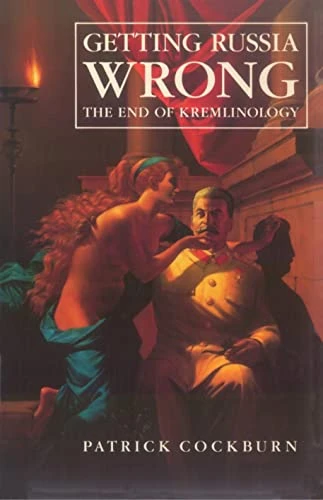
In 1983 Lieutenant General William Odom, then head of the US National Security Agency, forecast that the Soviet Union in the 1980s would see 'sound and fury about domestic reform accompanied by little actual change', while abroad, 'we can expect threats to end détente.' Why did so many Western specialists on the Soviet Union fail to foresee the changes taking place in Moscow after the death of Brezhnev? Why did Kremlinologists make annual predictions of the fall of Gorbachev and why were they wrong? In this timely account of life in Gorbachev's USSR, Patrick Cockburn describes the forces which are changing Soviet society. He goes on to scrutinize the ways in which the perceptions of those observing the Soviet Union - from academic Kremlinologists to casual visitors - are shaped and distorted. 'Visiting Moscow today is like visiting a hothouse where unusual flowers are growing, but outside the Russian landscape is largely unchanged, if not impervious to change', wrote Karen Elliott House, foreign editor of the Wall Street Journal, at the end of 1988. Cockburn argues that the exact opposite is true. Surveying the Soviet Union from Siberia to the Ukraine he shows how the social, economic and ethnic landscape has been transformed in the thirty years between the death of Stalin and the election of Gorbachev. In so doing he presents the Gorbachev phenomenon in a new light
This book is second hand, and while you may not get the same publication/version/reprint/edition shown in the picture it will be the same author and title.
Removing existing stickers from a second hand book may damage it, so we refrain from doing so.
Even if the picture shows no price stickers on the book they may be there on the copy you receive.
All of our books are in very good condition.
Please be aware that there will be a sticker with an identifying number on the spine of this book.