Euro
Euro
 British Pound


Product Description
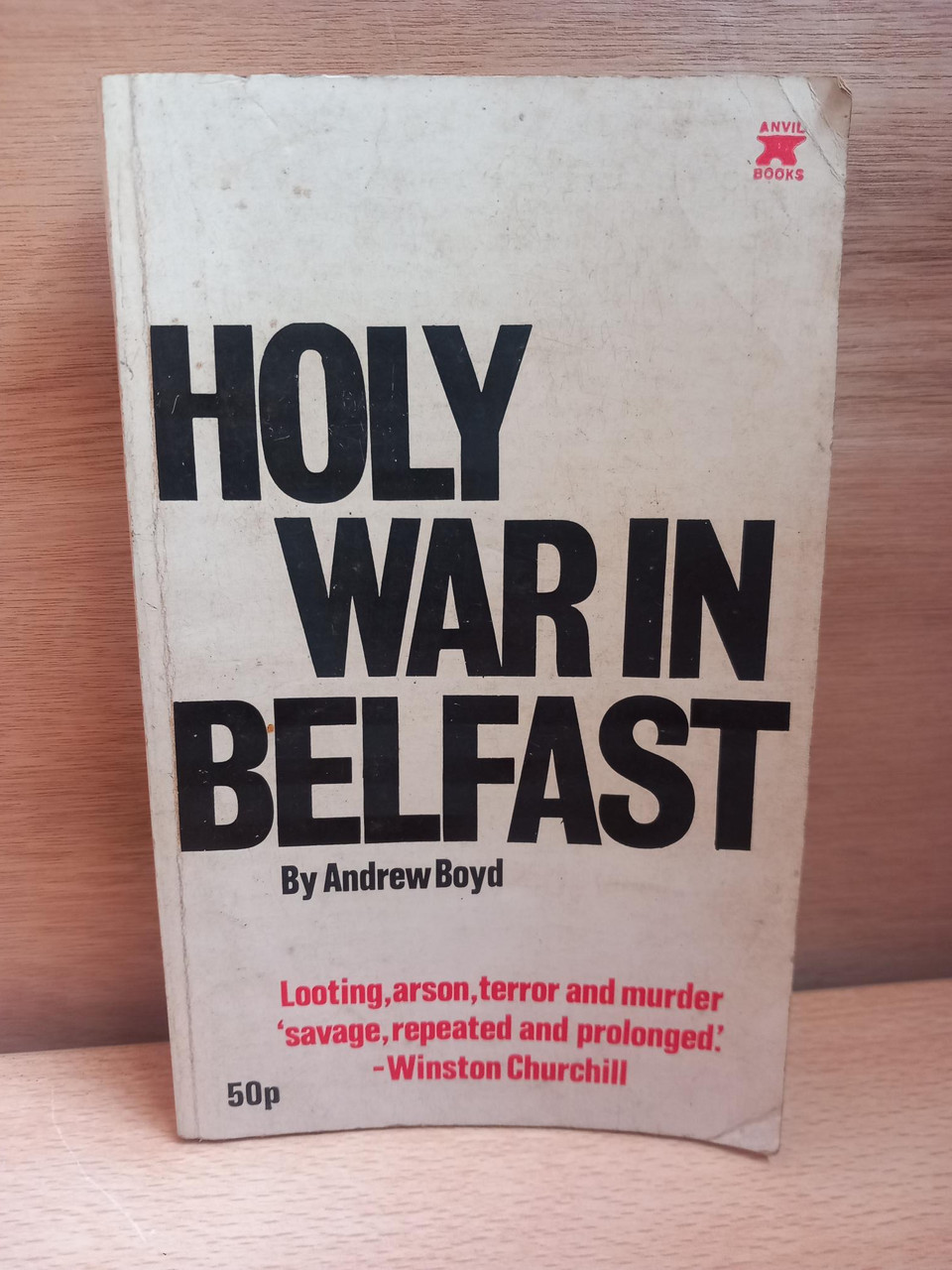
The author of a nuber of works on Northern Ireland, and on Trade Union and working class history , Boyd's most striking work was his book Holy War in Belfast, which detailed the violent outbreaks other historians had tended to play down.
By an extraordinary coincidence his account of the city's previous violent episodes was published in August 1969, the exact month when the most recent troubles erupted. Rarely has there been a more timely example of history repeating itself.Until its publication few if any were aware of the recurring pattern of communal commotion in Belfast. In the 19th century for example, serious disruption broke out on at least a dozen occasions.
The same working-class areas were affected time after time, including the Shankill, Falls, Sandy Row and Short Strand.
The importance of Holy War in Belfast was outlined by the late Professor John Whyte. Previous histories, he wrote, were characterised by "blandness" with the sectarian riots barely mentioned.
Another commentator concurred, noting that "the positive aspects of community relations were emphasised and the negative underplayed." Whyte concluded: "It was left for Andrew Boyd's Holy War in Belfast to bring these riots back into the consciousness of historians."
Mountainous amounts of material were available in the form of reports of various official commissions of inquiry which gave an almost literally blow-by-blow account of rioting. Boyd burrowed into the dusty volumes of evidence and conclusions, which generally blamed loyalists and police.
The research was originally intended as a PhD thesis - he had graduated from Queen's University Belfast with an honours degree BSc in economics in the early 60s. A unionist historian later wrote disapprovingly that his book was "vividly written, but exhibits strong political prejudices". But it restored to the historical record the fact that sustained violence, far from coming out of the blue, had numerous precedents.
Boyd, who was born in 1921, was the son of a Boer War veteran. He came from a conventional Protestant working-class background in east Belfast, serving an apprenticeship as an engineer in the Belfast shipyards. From an early age he disavowed traditional unionist politics. Instead, witnessing poverty and suffering in Belfast during the years of the Great Depression and the horrors of the rise of Nazism in Europe, he became a committed socialist. He died in 2011.
This is the reprinted ( 2nd) edition, 1971 testament to its popularity, in white pb covers, crease to front cover corner, internally unmarked, usual pb page tanning. Published by Anvil Books , Tralee.